
Introduction
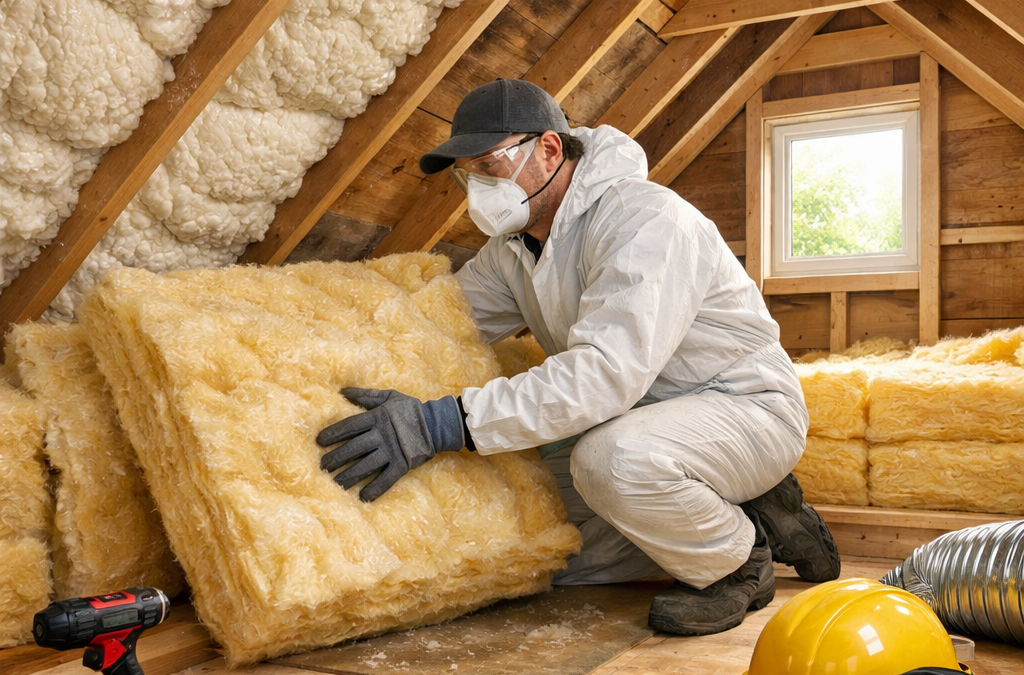
Attic insulation options for homeowners range from high-performance spray foams to affordable fiberglass batts. Other key choices include blown-in cellulose, mineral wool and reflective insulation. Upgrading attic insulation reduces annual heating and cooling costs and improves your home’s energy efficiency, comfort and structural health. Your local insulation contractor understands the regional building codes, climate-specific needs, and potential energy rebates and can offer expert recommendations and faster installations.
Wrap Your Home in Savings and Comfort: Top Attic Insulation Upgrades
Do you know that roughly 90% of US homes are underinsulated? According to the EPA, proper attic sealing and insulation can reduce annual energy bills by up to 15-20%. If you are noticing increased energy bills, drafts, hot and cold zones inside your home, and ice dams in winter, it’s time to upgrade your attic insulation. For homeowners searching for a local insulation contractor near me, we have listed below some insulation upgrades that can ensure consistent temperatures and comfort all year round.
| Did you know?Per the Department of Energy, the R-value of reflective insulation is dependent on the system; the air space it faces, rather than just the thickness of the material itself. |
Here is your guide to attic insulation upgrades every homeowner should consider.
- Spray Foam Insulation
It’s a high-performance, spray-applied polyurethane foam that instantly expands to seal gaps, providing superior air sealing, moisture resistance and high R-values (5-8 /inch).
- Open-cell spray foam is flexible and lighter. This lower-density choice provides better soundproofing.
- Closed-cell spray foam is dense with a high R-value and acts as a vapor and moisture barrier, offering structural strength.
- Blown-in Cellulose Insulation
This is a high-performance, eco-friendly material made from recycled paper. It offers superior air sealing, mold protection, fire resistance and thermal insulation with an R-value of around 3.5 /inch. High-density loose-fill materials fill irregular gaps, spaces and crevices effectively.
| Important factThe Department of Energy recommends R-30 to R-60 for attics, depending on the climate zone; R-49 to R-60 for colder regions, R-30 to R-49 for milder to warmer climates, and R-38 for maximum energy efficiency. |
- Fiberglass Batt Insulation
This is an affordable, easy to install, highly effective thermal barrier and is commonly used in ceilings, walls and floors. Made from spun glass fibers, this insulation type comes in pre-cut flexible panels, designed to fit standard stud, joists and rafter spacings.
- Mineral Wool
This is high performance, fire resistant and sound absorbing material, offering superior thermal efficiency. Mineral wool insulation provides excellent acoustic insulation and offers superior energy efficiency, making it ideal for roofs and walls.
- Reflective Insulation
This insulation type is a thin, lightweight material, typically aluminium foil, combined with bubbles or foams to reflect radiant heat up to 97%. Reducing energy load, reflective insulation requires much less space than traditional insulations and can also act as moisture barrier to prevent mold and condensation.
| Insulation type | Performance | Durability | Air sealing | Best suited for |
| Closed-cell spray foam(maximum efficiency) | Highest. R-6 to R-7 per inch. | Very high. 50+ years. | Excellent. Acts as a moisture and air barrier. | Unvented attics, sealing complex gaps and shapes. |
| Batt and roll insulation | Moderate. R-2.9 to R-3.8 per inch. | High, depending on proper installation. | Poor. Can slag, leaving gaps. | Wide-open joist spacing, budget-friendly new builds. |
| Blown-in cellulose | High. R-3.2 to R-3.8 per inch. | Moderate (20-30 years). Can settle. | Good, especially dense pack fills irregular spaces | Topping off existing insulation in older homes or retrofits. |
| Mineral wool (rockwool) | Good. R-3 to R-4.3 per inch. | High (30-40 years). Excellent fire and moisture resistance. | Moderate to good. | Fire-resistance and moisture-prone areas. |
| Reflective insulation | Typically R-4 to R-7, depending on application. | High. It may last for up to 30 years. | While the primary function is to reflect 94-98% of radiant heat, it is effective in reducing air infiltration. | Stapled to rafters to reduce heat gain. Effective in sealing HVAC duct systems. |
Conclusion
Insulation upgrades are one of the most effective, high-return home improvement upgrades. Working with a local insulation contractor provides proper, code-compliant installation that maximizes your home’s energy-efficiency and comfort and lowers energy bills. Schedule a consultation with your local insulation contractor now and improve your home comfort, value and lower energy bills.
FAQs
Do insulation upgrades have a better ROI?
Insulation upgrades can have a 100% to 117% return on investment when selling a home.
When should I upgrade my attic insulation?
Insulation experts recommend replacing insulation if it’s damaged, if your home has hot and cold spots and if the insulation is over 15 to 20 years old.
What is the benefit of upgrading insulation?
Upgrading insulation improves home comfort and optimizes HVAC performance. A properly insulated attic prevents mold growth and the formation of ice dams in winter.