
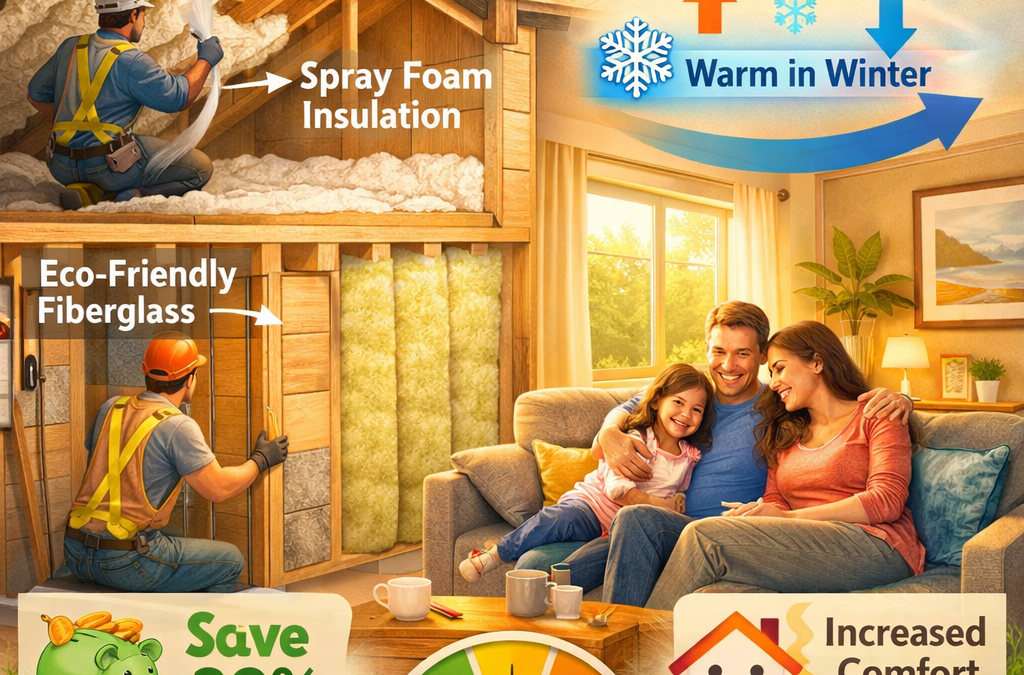
Modern homes lose a surprising amount of energy through poor insulation in their walls, attics, and floors. Insulation slows down the transfer of heat and eliminates the air leaks to retain more energy within. When properly installed, it stabilises your inner temperature, reduces the cost of utilities to keep your home cool, and increases the performance of your entire home. That’s why it’s one of the smartest investments for all those who are interested in paying less and staying more comfortable.
How Energy-Efficient Insulation Improves Home Comfort
Insulation is the key to the comfort of a home. It offers a balancing, high temperature, drafts are stopped, and moisture is also controlled, and therefore you will have access to a much quieter, healthier, and consistent living space all year round.
Read along:
- Maintains the same temperatures inside the Building
By preventing heat from escaping during the winter and getting into all rooms during the summer, insulation keeps all rooms at stable temperatures. No more hot spots, no more cold spots – every space will be comfortable and usable.
- Minimizes Drafts and Cold Spots
Air leaks around the walls, ceilings, and floors may cause chilly rooms. High-quality insulation prevents these unwanted air movements from entering your home and keeps its interiors solid, warm, and comfortable even during extreme weather.
- Improves Indoor Air Quality
Sealing the gaps and restricting outside airflow helps in restricting the dust, pollen, and pollutant entry. Cleaner indoor air helps to breathe better and reduces allergy and asthma symptoms.
- Enhances Noise Reduction
Insulation collects sound, thus making your home quieter. On traffic noise, it blocks it and reduces the sound transfer from one room to another, which then creates a subcimer that gives more peace and improves relaxation, sleep, and everyday comfort.
- Regulates Indoor Humidity
Good insulation is a means to control moisture by preventing condensation on walls and ceilings. This causes less dampness, mold will not grow, and the air is fresher and nicer all year long.
How Energy-Efficient Insulation Saves You Money
In addition to offering insulation on the comfortable side, it also has powerful financial benefits. It conserves energy, saves on heating and cooling costs, gives you home protection, and creates long-term property value while eliminating wasteful energy consumption.
Read along:
- Lowers Heating and Cooling Bills
Insulation keeps the warm air on the inside (in winter) or outside (in summer). This reduces system usage and reduces the monthly utility cost bill dramatically.
- Reduces HVAC Wear and Tear
A better-insulated home allows your heating and cooling system to need less use. That puts less strain on equipment, extends its life, and reduces maintenance costs and delays costly replacement.
- Provides Long-Term Return on Investment
Although insulation has a high initial cost that is well worth the price in energy bill savings. Over time, many homeowners are able to get back their investment and enjoy savings each and every year thereafter.
- Qualifies for Rebates and Tax Credit
For instance, governments and utilities often give people incentives to install energy-efficient insulation. Rebates and tax credits cover part of the construction project installation cost and make your construction project more affordable to build, helping increase your return on investment.
- Increases Home Resale Value
Attractive homes are energy efficient. Better insulation helps homes make a better efficiency rating, save on operating costs, and increase your home sales marketability, providing you with more-capable of selling faster and often for more.
Conclusion
Other most valuable homeowner upgrades is energy efficient insulation. It stabilises temperatures, reduces noise and improves air quality, and comes with impressive savings on energy bills and insures long term savings. By investing in good insulation, you will be able to have a quieter, healthier, and even more affordable home that will see you through the years.
FAQs
What areas of my home need insulation the most?
Attics, walls, Basements and Crawl Spaces are the largest heat loss areas and should be first insulated.
How long will it take me to insulate my home?
Most homeowners make the image pen uikerst by means of two to five years for attractive heating and cooling costs.
Isn’t spray foam better than fiberglass?
Spray foam is better air sealed, and fiberglass is cheaper. The best choice is one that is based on your home and your budget.
Can insulation really improve indoor air quality?
Yes. By preventing pollution and moisture from outside the outdoor air, insulation helps to ensure that the air is cleaner and better on the inside.
Do I need a professional installation?
Small attic projects are DIY projects, but it is better to have wall, basement, and spray foam insulation done by professionals for maximum efficiency.